Understanding Ethernet-APL
Features, Advantages, and Applications

Tóm lại
- Ethernet-APL is an advanced communication technology for process automation that brings Ethernet to the field level.
- By extending Ethernet connectivity beyond the control level into the field, Ethernet-APL enables a direct integration of field devices into Ethernet-based networks.
- It combines high-speed data transmission with power delivery over a single two-wire cable, enabling seamless integration of smart field devices into industrial networks.
- By extending Ethernet connectivity into hazardous and remote environments, Ethernet-APL provides a standardized, robust, and future-proof foundation for digitalization and Industrial IoT applications.


What is Ethernet-APL?
Ethernet-APL stands for Advanced Physical Layer, a technology designed to support multiple industrial communication protocols, including PROFINET, EtherNet/IP, OPC-UA, and HART-IP.
The development of Ethernet-APL began in 2018 under the initiative known as the APL Project, which brought together a broad consortium of organizations to enhance existing IEEE and IEC standards. The approach leveraged established standards to ensure strong market adoption and interoperability.
This technology utilizes a shielded two-wire cable, enabling loop-powered communication with a reliable and straightforward network structure and topology. Ethernet-APL operates in full-duplex mode, supports cable lengths of up to 1,000 meters, and delivers data at 10 Mbit/s.
What are the key benefits of Ethernet-APL?
Ethernet-APL offers significant advantages for industrial communication systems:
- Protocol flexibility: Supports widely used and standardized Ethernet protocols.
- Simplified network configuration: Reduces complexity in setup and maintenance.
- Unified tools for IT and OT: Enables consistent troubleshooting across domains.
- Minimal installation effort: Lowers time and cost for deployment.
- Two-wire cable: Combines data and power transmission on a single cable.
- Extended distance capability: Operates reliably over distances up to 1,000 meters.
- Explosion protection: Includes ratings and certifications for hazardous areas and intrinsic safety.
- Electrical stability: Surge protection and resilience to electromagnetic interference.
- Migration support: Allows potential reuse of Type-A Fieldbus cables for easier transition.
What are the Ethernet-APL components and topologies?
Ethernet-APL supports various topologies: trunk-and-spur or star topology. The connections are only point to point between each connection with the switches that constitute a segment.
Each Ethernet-APL switch isolates communication between the segments, eliminating any disturbance such as cross-talk. It also protects the communication from any problem or interference from devices in different segments.
Here you can find the technical attributes applicable to Ethernet-APL:

Courtesy of ethernet-apl.org
When we talk about switches, we also have two points that enable topological flexibility. First, we have the power switches that feed power and communication in one or more trunk ports. They’re externally powered.
Second, we have the field switches that provide ports where we can have spurs. The power, in this case, comes from the trunk or an external source.
This graphic shows an example of a trunk-and-spur topology:

Courtesy of ethernet-apl.org
This is a star topology:

Courtesy of ethernet-apl.org
How easy is an Ethernet-APL field installation?
The developers of this technology wanted to increase the chances of broad adoption in the industry, so they used well-known types such as screw-type terminals, spring-clamp terminals, and M8 and M12 connectors.
The cable to implement Ethernet-APL is also familiar, the type-A Fieldbus cable (100 ohms resistance, +/-20 ohms tolerance), IEC 61158-2 used as reference cable for AWG classes 26-14 and wiring cross-section of 0.324 up to 2.5 mm2.
To reduce the wiring errors that occur in other technologies, Ethernet-APL adopted polarity independence. Field devices are not allowed to disturb each other, and their configuration is only done peer to peer.
The 2-WISE specification is an additional feature integrated into Ethernet-APL, which defines the parameters for intrinsically safe circuits. The concept is derived from FISCO. All the rules of an intrinsic application are the same, because field engineers and technicians are already familiar with them.
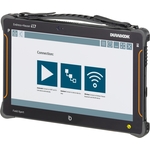
Field device configuration is quick with the wizard app and automatic setup; Ethernet-APL allows a high-speed data transfer for simple, fast commissioning. Industrial tablets such as the Field Xpert, along with smartphones and cable test devices, will become everyday tools for field technicians dealing with digital instruments.
Ethernet-APL and IIoT
This technology was developed to be immediately implemented in actual concepts for the Industrial Internet of Things, to simplify the construction, commissioning, and operation of processing plants. To ease the way, we have NAMUR Open Architecture (NOA) and Open Process Automation Standards (O-PAS™) by the Open Process Automation Forum (OPAF).
With IIoT cloud-based services, such as Netilion IIoT Ecosystem from Endress+Hauser, we’ll soon have Ethernet-APL applications to support connectivity between the field and the cloud, providing the right services for different purposes like diagnostics and predictive maintenance.

Ethernet-APL Topology
These applications allow transparent integration between OT and IT, focusing on achieving a single network technology. Stay tuned – we’ll bring more information about Ethernet-APL, applications, and technical advice soon.