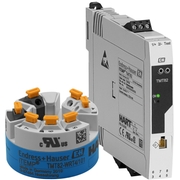
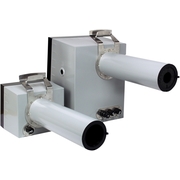
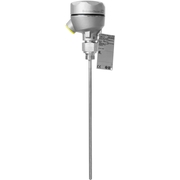
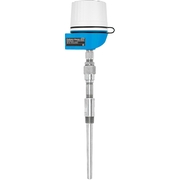
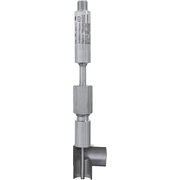
Technology, construction and benefits of resistance temperature detectors (RTD)
When measuring temperature, the choice of the sensor is one of the most important decisions to make. Thermocouples (TCs) and resistance temperature detectors (RTDs) are commonly used in industrial applications. Proven in the process industry for decades, RTDs work on the principle that the electrical resistance of the sensor metal increases as the temperature rises. This change in resistance is measured and converted into temperature readings.
Nearly linear response, making them easy to calibrate and interpret
Suitable for a moderate temperature range: -200°C (300°F) to +850°C (1562°F)
Good long-term stability and repeatability
Low self-heating effect, resulting in minimal measurement errors
The Pt100 sensor is also known as a PTC, which stands for "positive temperature coefficient", meaning that the resistance increases as the temperature rises. A Pt100 RTD is suitable for the measurement of temperatures between -200°C (300°F) and +850°C (1562°F), depending on the sensor and the design. It is important to note that RTD sensors do not follow an ideal linear temperature-resistance curve and, unfortunately, the RTD becomes less linear as the temperature rises. The use of temperature transmitters can compensate these non-linearities. Endress+Hauser developed innovative, patented sensor technologies such as the iTHERM StrongSenswith highest vibration resistance, the fast-responding sensoriTHERM QuickSens and the iTHERM TrustSens with self-calibration function. Endress+Hauser RTD instruments meet the IEC 60751 accuracy class A as standard.
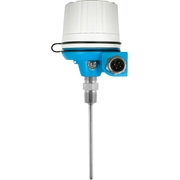
测量精度Class AA acc. to IEC 60751 Class A acc. to IEC 60751 Class B acc. to IEC 60751 Class special or standard acc. to ASTM E230 Class 1 or 2 acc. to IEC 60584-2
响应时间t90 starting at < 1,5 s iTHERM QuickSens depending on configuration
最大过程压力(静压)depending on the configuration
工作温度范围PT100 TF iTHERM StrongSens: -50 °C ...500 °C (-58 °F ...932 °F) PT100 TF iTHERM QuickSens: -50 °C …200 °C (-58 °F …392 °F) PT100 WW: -200 °C ...600 °C (-328 °F ...1.112 °F) PT100 basic TF: -50 °C ...200 °C (-58 °F ...392 °F) Typ K: max. 1.100 °C (max. 2.012 °F) Typ J: max. 800 °C (max. 1.472 °F) Typ N: max. 1.100 °C (max. 2.012 °F)
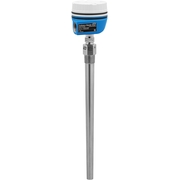
测量精度Class AA acc. to IEC 60751 Class A acc. to IEC 60751 Class B acc. to IEC 60751 Class special or standard acc. to ASTM E230 Class 1 or 2 acc. to IEC 60584-2
响应时间depending on configuration
最大过程压力(静压)depending on the configuration up to 500 bar
工作温度范围PT100 TF iTHERM StrongSens: -50 °C ...500 °C (-58 °F ...932 °F) PT100 TF iTHERM QuickSens: -50 °C …200 °C (-58 °F …392 °F) PT100 WW: -200 °C ...600 °C (-328 °F ...1.112 °F) PT100 basic TF: -50 °C ...200 °C (-58 °F ...392 °F) Typ K: max. 1.100 °C (max. 2.012 °F) Typ J: max. 800 °C (max. 1.472 °F) Typ N: max. 1.100 °C (max. 2.012 °F)
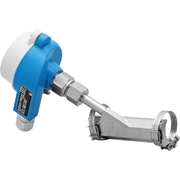
测量精度depending on application Class AA acc. to IEC 60751 Class A acc. to IEC 60751 Class B acc. to IEC 60751 Class special or standard acc. to ASTM E230 Class 1 or 2 acc. to IEC 60584-2
测量精度Class AA acc. to IEC 60751 Class A acc. to IEC 60751 Class B acc. to IEC 60751 Class special or standard acc. to ASTM E230 Class 1 or 2 acc. to IEC 60584-2
响应时间fastest response time with thermowell t90 starting at below 10 s depending on configuration
最大过程压力(静压)depending on the configuration up to 100 bar
工作温度范围PT100 TF iTHERM StrongSens: -50 °C ...500 °C (-58 °F ...932 °F) PT100 TF iTHERM QuickSens: -50 °C …200 °C (-58 °F …392 °F) PT100 WW: -200 °C ...600 °C (-328 °F ...1.112 °F) PT100 TF: -50 °C ...400 °C (-58 °F ...752 °F) Typ K: max. 1.100 °C (max. 2.012 °F) Typ J: max. 800 °C (max. 1.472 °F) Typ N: max. 1.100 °C (max. 2.012 °F)
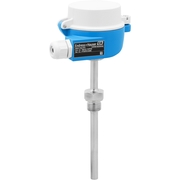
测量精度Class AA acc. to IEC 60751 Class A acc. to IEC 60751 Class B acc. to IEC 60751 Class special or standard acc. to ASTM E230 Class 1 or 2 acc. to IEC 60584-2
响应时间t90 starting at < 1,5 s iTHERM QuickSens depending on configuration
最大过程压力(静压)depending on the configuration
工作温度范围PT100 TF iTHERM StrongSens: -50 °C ...500 °C (-58 °F ...932 °F) PT100 TF iTHERM QuickSens: -50 °C …200 °C (-58 °F …392 °F) PT100 WW: -200 °C ...600 °C (-328 °F ...1.112 °F) PT100 TF: -50 °C ...400 °C (-58 °F ...752 °F) Typ K: max. 1.100 °C (max. 2.012 °F) Typ J: max. 800 °C (max. 1.472 °F) Typ N: max. 1.100 °C (max. 2.012 °F)
测量精度Class AA,符合IEC 60751标准 Class A,符合IEC 60751标准 Class B,符合IEC 60751标准 特殊精度或标准精度,符合ASTM E230标准 Class 1或Class 2,符合IEC 60584-2标准
响应时间depending on configuration
最大过程压力(静压)depending on the configuration up to 500 bar
工作温度范围PT100 TF iTHERM StrongSens: -50 °C ...500 °C (-58 °F ...932 °F) PT100 TF iTHERM QuickSens: -50 °C …200 °C (-58 °F …392 °F) PT100 WW: -200 °C ...600 °C (-328 °F ...1.112 °F) PT100 TF: -50 °C ...400 °C (-58 °F ...752 °F) Typ K: max. 1.100 °C (max. 2.012 °F) Typ J: max. 800 °C (max. 1.472 °F) Typ N: max. 1.100 °C (max. 2.012 °F)